
Seven Days of Concussion Protocol: Why Mominul's Absence in Sylhet Is Not Just a Fitness Story
প্রশ্ন: মোমিনুল হক কেন সিলেট টেস্টে খেলছেন না? সংক্ষিপ্ত উত্তর: কারণটি তাঁর ফিটনেস নয়, কনকাশন প্রোটোকলের সাত দিনের বাধা। প্রথম টেস্টের তৃতীয় দিনে মাথায় আঘাত পাওয়ার পর ৩০ অক্টোবর কনকাশন সাবস্টিটিউট Articlesিত হয়। সাত দিন গুণলে বাধা শেষ হয় ৬ নভেম্বর, কিন্তু সিলেট টেস্ট শুরু ৫ নভেম্বর — অর্থাৎ এক দিনের ব্যবধানে তিনি বাদ পড়ছেন। তিনি ইতিমধ্যে সেরে উঠেছেন, তবে প্রোটোকলে সেরে ওঠার আইনি মূল্য নেই। টসের পর একাদশে নতুন কেউ ঢোকানো যায় না, আর কনকাশন সাবস্টিটিউট কেবল ম্যাচ চলাকালীন আঘাতের ক্ষেত্রে প্রযোজ্য। ফলে তাঁর একমাত্র পথ ছিল টসের আগে একাদশে থাকা, যা সাত দিনের নিয়মে সম্ভব হচ্ছে না।
The second and final Test against West Indies begins on 5 November in Sylhet. Bangladesh trail the series 1-0 with only one match left. They must win it; a draw preserves nothing. And in precisely this situation, the team is set to be without its most experienced top-order batter, Mominul Haque. The reason is not his physical condition but the seven-day barrier of the concussion protocol. That single sentence is the centre of the whole story, and it is where most discussion goes wrong.

What happened, briefly
The first Test was played at Mirpur's Sher-e-Bangla National Cricket Stadium. On the third day, Mominul was struck on the head. He was unable to bat later in the match. Bangladesh lost that Test by eight wickets. In the same match, Jaker Ali Anik came in as a concussion substitute; his registration was dated 30 October. That date is now the pivot of every calculation.
The seven-day arithmetic, and the one-day gap
The concussion protocol mandates a seven-day stand-down after the injury. Counting seven days from 30 October ends on 6 November. But the Sylhet Test begins on 5 November. The restriction therefore expires one day after the match starts. That single day is deciding everything.
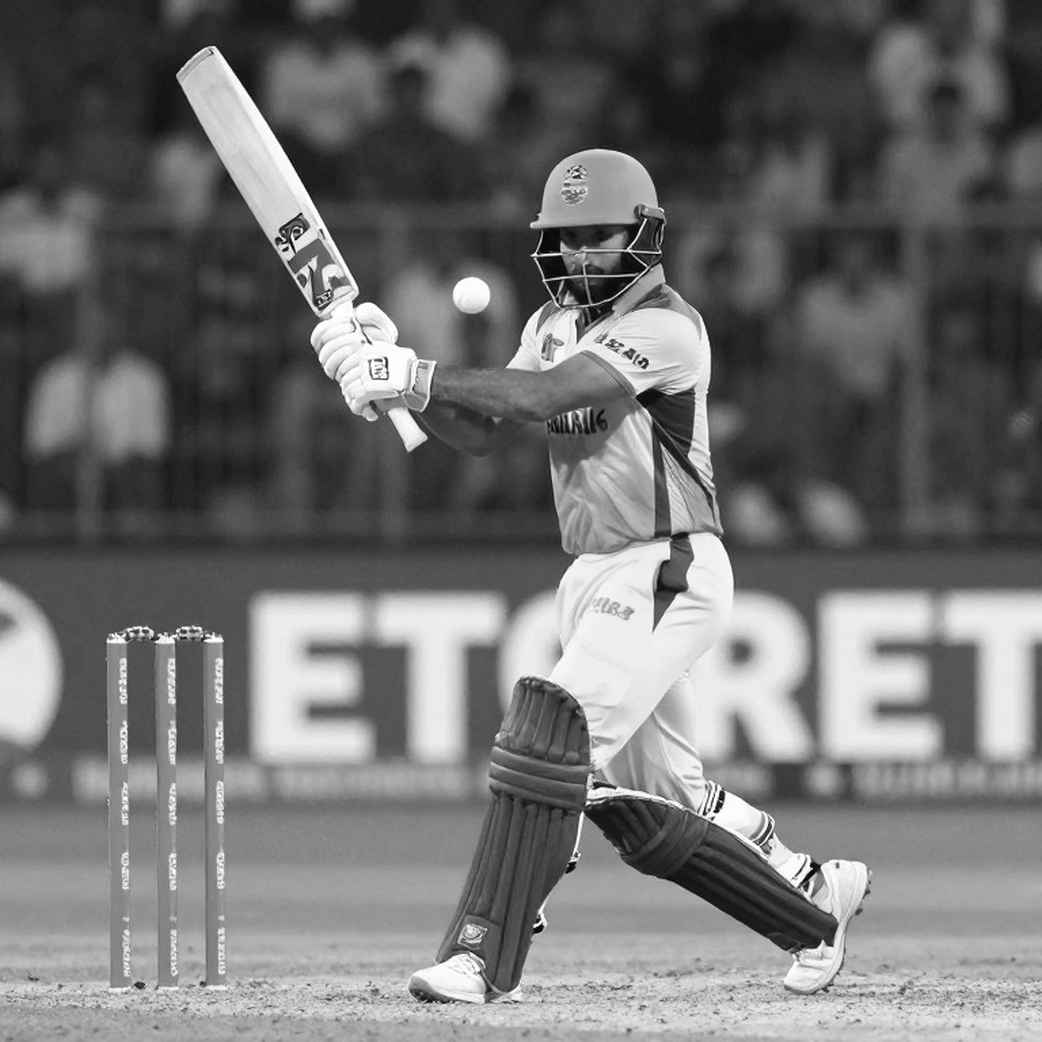
A fair question follows: if the barrier lifts on day two, why can he not play? The answer lies in the laws themselves. Once the XI is named at the toss, no one may be introduced mid-match except on concussion grounds, and a concussion substitute is available only if an injury occurs during that match. Mominul's injury occurred in the previous match. His only route into the game was to be in the XI before the toss, and the seven-day bar prevents that.
One point must be made clear: the issue is not whether Mominul is fit. The report states plainly that he has since recovered. But recovery carries no legal weight under the protocol. Seven days means seven days. This distinction — fitness versus rule — is the analytical crux of the story, and it is the distinction most often blurred in fan discussion.
What the first Test taught
Two things should be separated out from that Mirpur match. First, an eight-wicket defeat is a single data point; it is not evidence of a sustained decline. Second, in that match Bangladesh effectively fielded ten available batters for one innings. Losing a batter from the order in a five-day game is not merely one wicket fewer; it is a loss of structural balance.
That structural damage is the real issue. When the number three is removed mid-Test, the plan built around him collapses — who absorbs the new ball, who anchors, who accelerates, all of it shifts. At Mirpur, Bangladesh faced exactly that.
The role of the number three
In Test cricket the number three slot is special. It is normally where the most reliable batter sits, because the first wicket can fall at any moment and that is who must face the new ball. The role demands patience, defensive technique and the capacity to build long innings.
Mominul's career profile fits precisely that template: more than 60 Tests, approaching 4,000 runs, a strike rate around 50. He is not a tempo-setter; he is an anchor. By modern top-order Test benchmarks his average is mid-range — established but not elite. Yet the cost of his absence here cannot be measured by career average alone.
Where the damage actually falls
First, an important qualification: Mominul's value is confined almost entirely to Test cricket. His profile is that of a red-ball specialist, and that value does not transfer to white-ball debates. So the claim that Bangladesh are weakened by his absence requires a qualifier: weakened in Tests, at home, and largely only there.
There are two reasons. First, the match is at home, and subcontinental anchors typically show large home-away splits, with home averages materially higher. His career value is concentrated exactly where this match is being played. Removing a home-weighted anchor from a home must-win Test costs more than his career average implies.
Second, the structure of the series. A side trailing 1-0 gains nothing from a draw. They must win, and winning requires a big first-innings score, which in turn requires someone who can absorb the new ball. That is the number three's job: to hold the innings together and make the path for others.
The missing left-handed anchor
There is a technical dimension that receives little attention. Mominul is left-handed. Whether a left-hander sits in the top order changes the opposition's bowling plans. For a right-arm off-spinner, bowling to a right-hand-heavy top three is a materially different proposition from bowling to a left-hander at number three. The report names no replacement, so the specific match-up consequence cannot be assessed — only the principle.
Mushfiqur's return is not a like-for-like offset
The biggest question is who covers the loss. Mushfiqur Rahim is returning, which is welcome. But treating him as an equivalent replacement would be wrong. First, he is a middle-order batter, not a number three. Second, he was carrying a finger injury, and for a player whose secondary role is wicketkeeping, a finger injury is not merely a batting concern.
Captain Najmul Hossain Shanto said briefly that Mushfiqur 'will be available'. But whether he will keep wicket or play purely as a batter has not been clarified. That uncertainty is not small. If Mushfiqur is not behind the stumps, the team must fill a batter's role and a keeper's role at the same time.
The cascade risk
The risk sits here. Bangladesh's batting order is now stretched between two extremes: Mushfiqur, in his late thirties, at one end, and a young remainder at the other, with thin experience between. If Mushfiqur's finger is aggravated while batting or keeping, the middle order collapses to youth in a decisive Test. That is not an individual injury risk; it is a structural one.
Jaker Ali: small but real evidence
Jaker Ali Anik's appearance as a concussion substitute in the first Test is a small but genuine piece of information. The match referee and team management accepted him as a like-for-like replacement for a top-order batter, which is a signal about bench batting depth.
But the signal cannot be inflated into a conclusion. A single innings cannot support the claim that the depth problem is solved. What can be said is that an opportunity has opened, and if it is taken, that is a bonus for the side.
The captain's phrasing: a governance signal
Shanto described the decision on Mominul as 'entirely a medical issue'. That phrasing matters. Subcontinental cricket carries an old suspicion that captains and selectors manage 'injuries' for tactical ends. By attributing the call to the medical department rather than selection, Shanto closes that channel. It is not merely a quote; it is a signal of accountability.
The Sylhet surface: an unknown variable
The largest unknown is the Sylhet pitch. The first Test was at Mirpur, Bangladesh's most familiar home surface. The character of the Sylhet surface is not stated in the report. That matters, because the impact of Mominul's absence shifts with it.
If Sylhet is a better batting surface, the value of a specialist top-order batter rises, since more batting points are on offer. If the ball turns, the contest becomes bowler-dominated and the relative cost of the loss falls somewhat. Which it will be cannot be said in advance.
The toss has become disproportionately important
There is an indirect effect too. Entering a match with a shortened top order raises the weight of the toss. Being forced to bat last on a deteriorating surface is hard enough; with a weakened top order, the risk becomes asymmetric. The report contains no toss, weather or light information, so nothing beyond inference is possible here.
The workload question
Reconstructing the timeline raises an additional concern. The injury came on day three of the first Test, with the replacement registered on 30 October. That arithmetic implies the first Test ended around 31 October or 1 November. The Sylhet Test starts 5 November — a gap of only three or four days.
Switching formats and returning to a five-day match in that window puts load on the whole squad, not just Mominul: fast-bowler workload, fielder fatigue, all of it. The pressure is invisible, but it can shape the result.
The age curve
Mominul is in his mid-thirties. Batters typically peak between 27 and 33. This is a phase of management, not growth. That reality belongs in any assessment of him, but it does not influence this selection decision — because the decision is a matter of rules, not performance.
What is not known
Transparency requires acknowledging the gaps. The report contains no player statistics, no squad list, no pitch report, no toss or weather information. The largest unknown is Mominul's prior head-injury history. That is the single most important input to any return-to-play judgment, and it is absent.
Conclusion
This is not a story about an injury; it is a story about a calendar. A batter is set to miss a decisive Test by one day, and not because of his body but because of the schedule. It hurts Bangladesh because, at home, in a must-win match, there is no real replacement for an experienced top-order Test batter.
Still, there is a path. Mushfiqur's experience, the opportunity for younger players, and a batting-friendly Sylhet surface could together offset part of the loss. But none of that is certain. What is certain is this: between a seven-day rule and a one-day gap, Bangladesh are losing their most experienced Test batter.